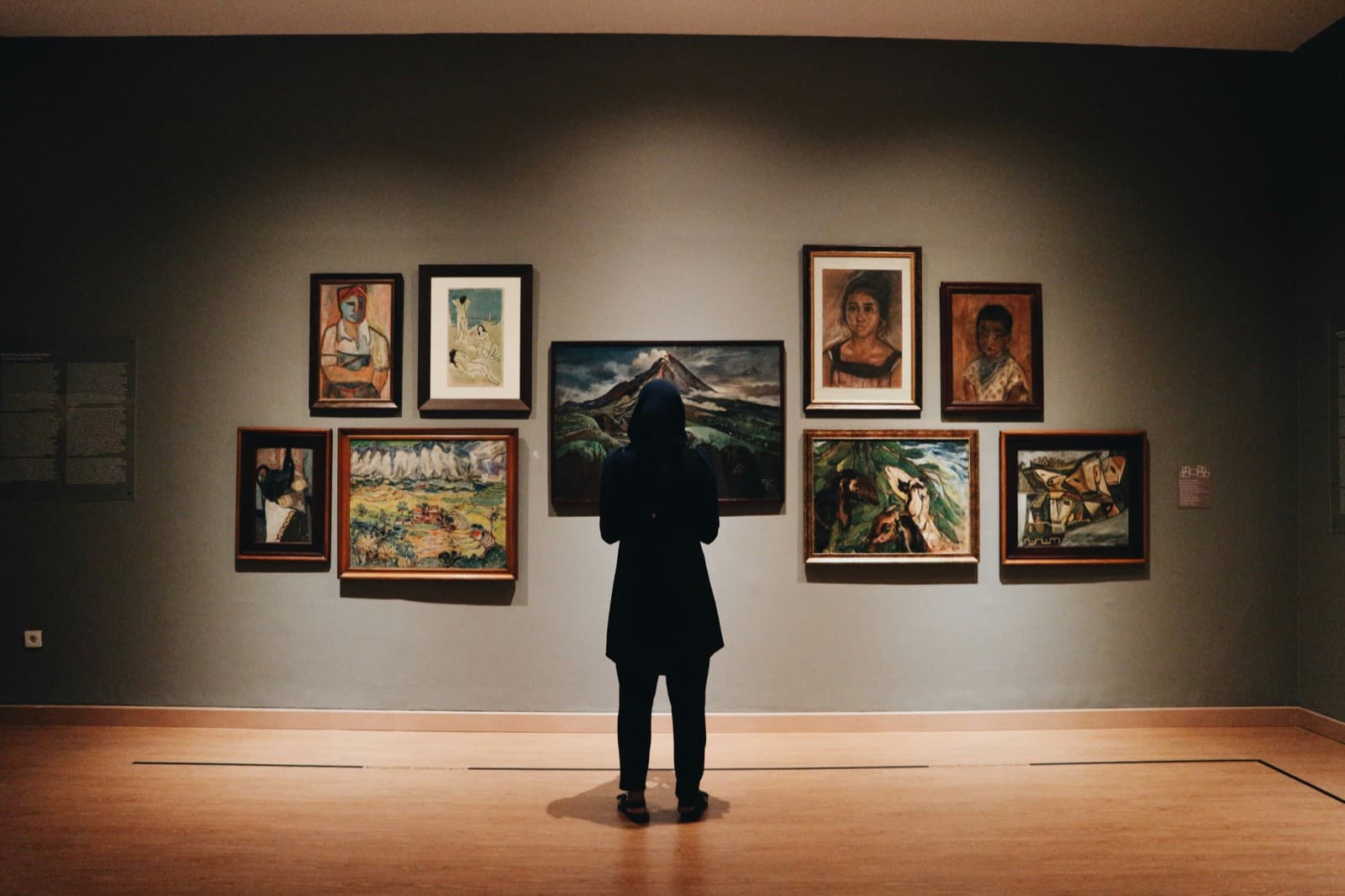
Entrusting a painting or a sculpture to a museum for five, ten or twenty years is nothing like lending it for the duration of an exhibition. A long-term loan (known in France as a "dépôt") places the work in an institution's galleries, offers it to the public, sometimes makes it part of a permanent display — and, throughout that time, someone has to answer for it if it is stolen, damaged or destroyed. Many owners sign a deposit agreement assuming that "the museum takes care of everything". The reality is more nuanced: what the insurance covers, who pays for it and at what value are decided clause by clause, before signing. Here is what a lender needs to check so that the generosity of a long-term loan does not backfire.
A long-term loan is not an exhibition loan
The two are often confused in everyday language, but law and insurance treat them differently. The loan of a work for an exhibition is a time-limited episode: the work leaves for a few weeks or months, then returns to its owner. A long-term loan works on another timescale — French practice refers to a loan of at least five years, and many deposits run for decades.
This duration changes everything. A deposited work lives in the institution: it is hung, taken down as displays rotate, moved to storage, lent in turn to another exhibition, exposed to the climate and to visitors year after year. The official vocabulary distinguishes the depositor — the party who entrusts the work — from the depositary, the institution that receives it. Between the two, the deposit agreement sets out responsibilities, including the most sensitive one: insurance.
Nor is a long-term loan a gift. The owner remains the owner and will recover the work at the agreed term. That is precisely what makes insurance delicate: for years, something that belongs to you sits under someone else's roof, and in someone else's custody.
Who insures the deposited work?
This is the question that settles everything, and there is no automatic answer. In many long-term loans, it is the receiving institution that insures the work for the entire period, transport included: the museum is used to the procedures, has a suitable policy and prefers to control the cover of the objects it exhibits. But this is not a universal rule.
For deposits of works owned by the French State, the framework is explicit: the agreement specifies how the depositor is insured against theft, loss and damage, during transport and throughout the deposit, and, unless otherwise stipulated, transport and insurance costs are borne by the depositor. In other words, the burden can fall on the party who entrusts the work — including when the depositor is a private individual making a piece available to a museum.
For a private collector, three configurations are possible, and you need to know which one applies:
- The museum insures, at its own expense. The most comfortable option for the lender, provided you check the insured value and the real scope of the policy.
- The museum insures, but the premium is recharged to the owner. Common; the lender pays without always knowing it.
- The owner keeps their own insurance. Their all risks agreed-value policy, with nail-to-nail cover must then expressly cover the work away from home, at a third party's premises, for a long period — something many standard policies do not provide for.
The worst scenario is a void: each party believes the other has insured the work, and no one actually has. Before any signature, one sentence must be written in black and white in the agreement: who takes out the policy, for which risks, at what value, and who pays the premium.
The French State indemnity does not cover long-term loans
This is a common confusion, and it can be costly. The French State indemnity (garantie d'État) — the scheme that allows major museums to borrow works without paying a commercial insurance premium — is reserved for temporary exhibitions. It was designed for time-limited events, not to cover a work deposited for fifteen years in a gallery.
A lender who imagined being protected "by the State" because their work is in a public museum would therefore be relying on the wrong regime. A long-term loan falls under the deposit agreement and the insurance attached to it, not under the State indemnity for exhibitions. The latter, moreover, only applies above a loss threshold and for works not owned by the State: it never replaces full cover for a long-term deposit.
The lesson is simple: assume no public cover. For a long-term loan, protection comes from the agreement and the insurance policy that goes with it — nothing else.
At what value should a work be insured for ten years?
On a loan of a few months, the declared value stays fixed: the work is insured at the amount of the day, and the matter is closed when it returns. On a long-term loan, time becomes a risk factor in its own right. A work insured at its 2016 value may be heavily under-covered in 2026 if the artist's prices have doubled. In the event of a total loss, compensation would be based on an outdated amount, and the owner would bear the difference.
Two safeguards are essential. First, agreed value: a value set when the policy is taken out, written into the policy and paid without argument in the event of a total loss, as opposed to market value estimated after the event. The distinction is decisive for a rare piece, and we explain it in our comparison of agreed value and market value. Second, a review clause: on a long loan, the insured value must be re-examined at regular intervals, or you risk underinsurance through lack of revaluation. Every three to five years, depending on the volatility of the artist's market, a revaluation avoids discovering the problem on the day of the loss.
Checking on the work goes hand in hand with its value. For deposits of public works in France, a "récolement" — an on-site check of the presence and condition of each piece — is required at least every five years. A private lender has every interest in demanding the same: a documented, periodic inspection confirming that the work is indeed there and in good condition.
The insurance clauses to lock down in the deposit agreement
A good deposit agreement leaves nothing implicit. Here are the points the insurance must settle, and the right reflex for each.
| Point to settle | Risk if unclear | The right reflex |
|---|---|---|
| Who takes out the insurance | Void in cover: no one insures | Name the insurer and the policyholder explicitly |
| Insured value | Underinsurance over the years | Agreed value + periodic review clause |
| Outbound and return transport | Loss in transit not covered | Nail-to-nail cover for both journeys |
| Scope of risks | Unnoticed exclusions (theft without forced entry, etc.) | List theft, damage, fire, water damage |
| Internal movements | Work damaged outside the galleries | Cover storage, rotations, onward loans |
| End or termination of the deposit | Gap in cover on return | Cover until actual handover |
Two lines deserve particular attention. Transport first: the journey to the museum and above all the return, often forgotten, account for a large share of losses; cover must run door to door, from your wall to the museum's wall and back. Onward loans next: a deposited work may be lent by the museum to another institution for an exhibition. The agreement must state whether the owner is consulted and how the work is insured in that case, since it leaves the original scope.
Private lender: the checklist before signing
If you are entrusting a work to an institution for several years, a few checks are enough to turn a risky deposit into a controlled one:
- Read the insurance clause before anything else and identify who takes out the policy, who pays, and for which risks.
- Insist on an agreed value and a periodic review, not a value frozen at the date of signing.
- Check the condition report on arrival: an assessment of hosting conditions and a condition report protect the owner as much as the institution.
- Cover the return as well as the outbound journey, and the period until the work is actually handed back.
- Ask for a regular inventory check and access to the work for inspection.
- Keep your own policy on standby if the museum does not insure, or as a complement if there is any doubt about the scope of its cover.
A long-term loan is a fine commitment: it puts a work on view, supports an institution and brings a collection into public life. It still must not weaken the heritage it showcases. Whether you are a collector entrusting a piece to a museum or an institution hosting a long-term loan, a specialist broker can review the insurance clause of your agreement and fill the gaps before they show. To secure a current or upcoming long-term loan, you can request a quote tailored to a long-term loan.
FAQ
Who should insure a work deposited in a museum?
It depends on the deposit agreement. Often, the receiving institution insures the work for the entire period, transport included. But the burden may fall on the depositor, especially for deposits of State-owned works in France where, unless otherwise stipulated, insurance and transport costs are borne by the owner. The only certainty comes from what is written in the agreement.
Does the French State indemnity cover a long-term loan?
No. The French State indemnity (garantie d'État) is reserved for temporary exhibitions and does not apply to a long-term deposit. A work deposited in a museum for several years falls under the deposit agreement and the insurance attached to it, never under automatic public cover.
At what value should a work deposited for ten years be insured?
At agreed value — set when the policy is taken out and written into it — with a periodic review clause. Over such a long period, prices can change significantly: without revaluation every three to five years, the owner risks underinsurance and compensation based on an outdated amount.
What is the difference between an exhibition loan and a long-term loan?
An exhibition loan is time-limited: the work leaves for a few weeks or months, then returns. A long-term loan entrusts the work to the institution for several years, often at least five. The work lives there, is moved and sometimes lent on — which calls for cover designed for the long term, not for a simple round trip.
Can I keep my own insurance during the deposit?
Yes, if the museum does not insure the work or if you want a safety net. Your policy must then expressly cover the work away from your home, at a third party's premises, over a long period — something few standard policies provide for. It is best to have this confirmed in writing to avoid unnecessary double insurance or, conversely, a gap in cover.