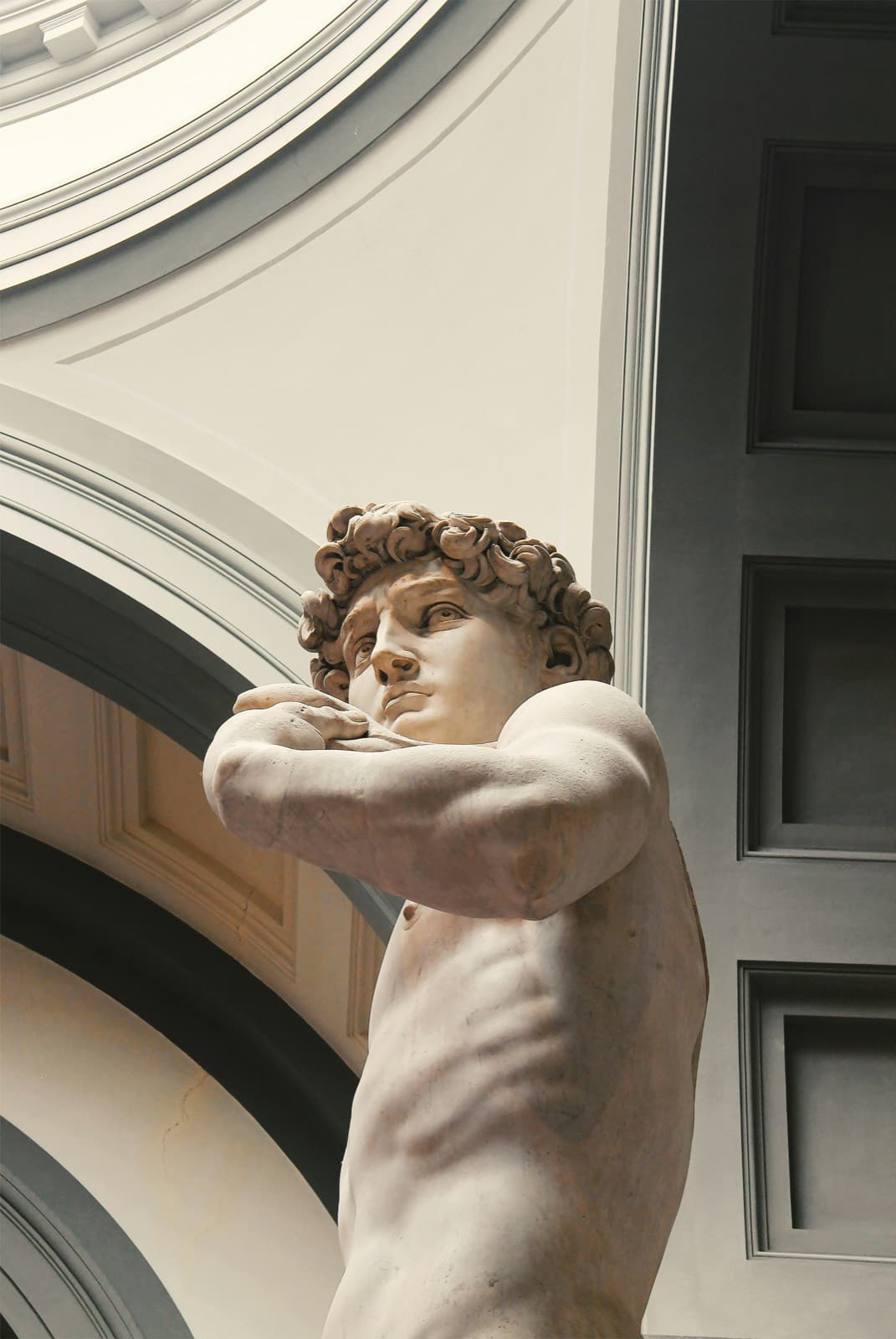
Moving and installing a sculpture weighing several tonnes has nothing in common with hanging a painting. Between the studio or the warehouse, the flatbed lorry, the crane and the final plinth, a monumental artwork goes through phases in which a single wrong move — a badly placed sling, ground that gives way, a gust of wind during the lift — can cause irreversible damage. It is precisely at these moments that policies hold their surprises, because not all policies cover rigging and lifting in the same way. Understanding where the real risks lie, and what your cover actually pays for, saves you from discovering a gap in cover on the day the piece is hanging at the end of a cable.
Why a monumental artwork falls outside the usual framework
A monumental artwork — a large bronze or steel sculpture, an installation several metres high, a heavy piece intended for a lobby, a garden or a public space — combines constraints that a work of ordinary size never faces. Its weight requires lifting equipment; its size triggers transport authorisations (abnormal load convoy, road-use permits); its installation requires a ground survey and sometimes civil engineering work (foundation block, anchoring). Each of these stages adds a risk that the insurer looks at closely.
The basic principle remains that of any quality fine art insurance: all-risks cover on an agreed-value basis, that is, a compensation amount set in advance in the policy, with no discussion about value at the time of the loss. That is the structure of an all-risks policy on an agreed-value basis. But for a monumental piece, the devil is in the extensions: what is — or is not — provided for heavy handling operations.
The three risk phases: transport, lifting, installation
An operation on a monumental artwork breaks down into three stages, each concentrating different risks. Confusing them means risking insuring only part of the operation.
Transport. Loading, securing the load, the road journey, possibly travelling as an abnormal load convoy. The risks are the classic ones of the road — accident, tipping, impacts — amplified by the mass and size of the piece. Good packing and bracing practice applies here too: see our guide to packing and crating a work of art for transport. Lifting. Craning, slinging, suspension, tilting from horizontal to vertical. This is the most spectacular phase and often the most accident-prone: a work weighing several tonnes at the end of a crane, vulnerable to wind, a broken sling or poorly distributed lifting points. Installation. Setting on the plinth, sealing, anchoring, assembling the components, final adjustments. Damage here is less conspicuous but real: a scratch during positioning, an impact against part of the building, a sealing error that weakens the piece.The table below summarises what is at stake in each phase.
| Phase | Main risks | Insurance point to watch |
|---|---|---|
| Transport | Accident, tipping, impact, faulty load securing | Transit cover included, abnormal load convoy declared |
| Lifting / craning | Broken sling, fall, gust of wind, wrong lifting points | "Rigging and lifting" extension, or exclusion to be removed |
| Installation / placement | Scratch, impact, faulty sealing, assembly | Cover during installation, not only "at the dock" |
| After installation | Vandalism, weather, corrosion (if outdoors) | Falls under separate cover for the work in place |
Does nail-to-nail cover really include lifting?
Nail-to-nail cover is designed for exactly this: covering the work continuously, from its starting point to its final destination, with no break between two policies. On paper, it encompasses transport, handling and installation. In practice, one specific point needs checking: rigging and lifting operations are sometimes among the items that require a specific mention or extension, because the technical risk involved is particular.A standard fine art policy may cover damage to the work during ordinary handling, but sub-limit — or exclude — damage occurring during a mechanised crane lift. The reason is simple: this is no longer just handling an object, it is a lifting operation comparable to a construction site. Hence the value of having it spelled out in black and white, before the operation:
- that the cover applies during lifting and craning, not only during road transport;
- that installation and sealing operations are included until the installation is signed off;
- that no sub-limit brings compensation below the agreed value during these phases.
Whatever the policy, the following always remain excluded: inherent vice (a design or structural defect in the work), gradual wear and corrosion, and the consequences of a lack of maintenance. These exclusion mechanisms are detailed in our article on exclusions and deductibles in fine art insurance.
Who is liable if the work falls during installation?
This is the sore point after a loss. Two approaches coexist on the same site and need to be distinguished.
On one side, insurance of the work itself (yours, or the lender's): on an all-risks basis, it compensates you for the damage to the piece, whether or not fault has been established. That is its great advantage — you do not wait for liability to be settled before being compensated. Once the indemnity has been paid, the insurer may exercise a right of recourse (subrogation) against whoever caused the damage.
On the other, the professional liability of the contractors: specialist shipper, lifting company (the "rigger"), installer. Their liability insurance covers the damage they cause, but often with limits and restrictive clauses — and a shipper is not always liable for the full value of the work. Relying solely on the contractor's liability exposes you to a gap between their liability limit and the real value of the piece.
The prudent rule: insure the work for its agreed value and do not rely solely on the contractors' liability. Also check that the contractors are properly covered, and require a joint condition report before and after each phase. Having a courier who accompanies the work is an asset on a monumental operation: they document, supervise and act as a technical witness in the event of a dispute. This division of roles between owner, shipper and installer is at the heart of the support we offer to art transport and logistics professionals.
What it costs: how pricing works (illustrative example)
The cost of cover for a monumental operation is calculated, like any fine art insurance, by applying a rate to the insured value, adjusted for the risk. The factors that weigh: the value of the work, the complexity of the lift, the distance and mode of transport, the quality of the contractors, and how long the work remains exposed to the risks of the operation. The general mechanisms are explained in our guide to the cost of fine art insurance.
As a purely illustrative example: one-off cover for a transport-and-installation operation is generally priced in per mille of the agreed value, the rate for a short assignment with a high handling risk being noticeably higher than that of simple annual cover for a work "at rest". These orders of magnitude are not a quote: only an examination of the actual file (value, lifting plan, site) makes it possible to put a figure on it. For a specific operation, you can request a quote to insure a monumental artwork.
Two levers reduce the premium: working with recognised contractors (fine art shipper, experienced lifting company) and providing a solid technical file. The more the risk is controlled and documented, the more the insurer can tighten the rate.
Checklist before the installation operation
Before giving the crane the go-ahead, go through the following points. They are what separate an operation under control from costly improvisation.
- Up-to-date agreed value. Is the work insured for its real value, set in the policy? Undervaluation penalises you in the event of a total loss.
- Nail-to-nail scope confirmed. Does the cover explicitly include lifting, craning and installation — and not just the road journey?
- Site survey. Can the ground bear the static and dynamic load? Is a foundation block or reinforcement needed? A structural engineer's opinion is often decisive.
- Authorisations. Abnormal load convoy, road-use permit, temporary occupation of public space: has everything been obtained before the day?
- Insured contractors. Do the shipper and the lifting company have professional liability insurance suited to the value of the piece?
- Condition reports. Is a joint photographic condition report planned before departure, after transport, after lifting and after installation?
- Weather. Is a stop procedure defined in case the wind exceeds the permissible threshold for lifting?
Once the piece is permanently installed, the nature of the risk changes: you move from a one-off operation to long-term display. If the work stays outdoors, it then falls under the cover for an outdoor sculpture exposed to the weather and vandalism, a different logic from that of transport. And if the operation concerns a building undergoing works, the points to watch are the same as for a work present during renovation works.
FAQ
Does my fine art transit insurance cover crane lifting?
Not always as a matter of course. Transit cover applies first and foremost to the journey; lifting and craning operations may require a specific mention or extension, because they resemble a construction operation. Have it confirmed in writing that lifting and installation are included before the operation.
Do I need to insure the work if the shipper has liability insurance?
Yes. The shipper's or installer's liability insurance covers the damage they cause, but often with limits below the real value of the work. All-risks insurance on an agreed-value basis compensates you directly, and the insurer then turns to the party responsible if need be. It is the safest protection.
What is an agreed value for a monumental artwork?
It is a compensation amount set in advance in the policy, on the basis of a documented valuation. In the event of a loss, you are compensated on that amount with no debate about value at the time of the claim. This is essential for a unique piece that is difficult to revalue in a hurry.
Does cover end once the work is installed?
Nail-to-nail cover ends at the close of installation, when the installation is signed off. Beyond that, the installed work falls under separate cover: insurance for indoor display, or cover for an outdoor sculpture if it is exposed to the weather and vandalism.
What damage remains excluded during installation?
The work's inherent vice (a design or structural defect), gradual wear and corrosion, and the consequences of a lack of maintenance remain excluded, as in any fine art policy. Accidental damage occurring during a properly covered lift, on the other hand, is compensable.
Who should take out the insurance: the owner or the organiser?
That depends on the agreement. For a loaned or commissioned work, the contract must clearly state who insures the work, and on what value, during transport and installation. Without a clear clause, the owner has every interest in keeping control of their own cover rather than depending on a third party's.