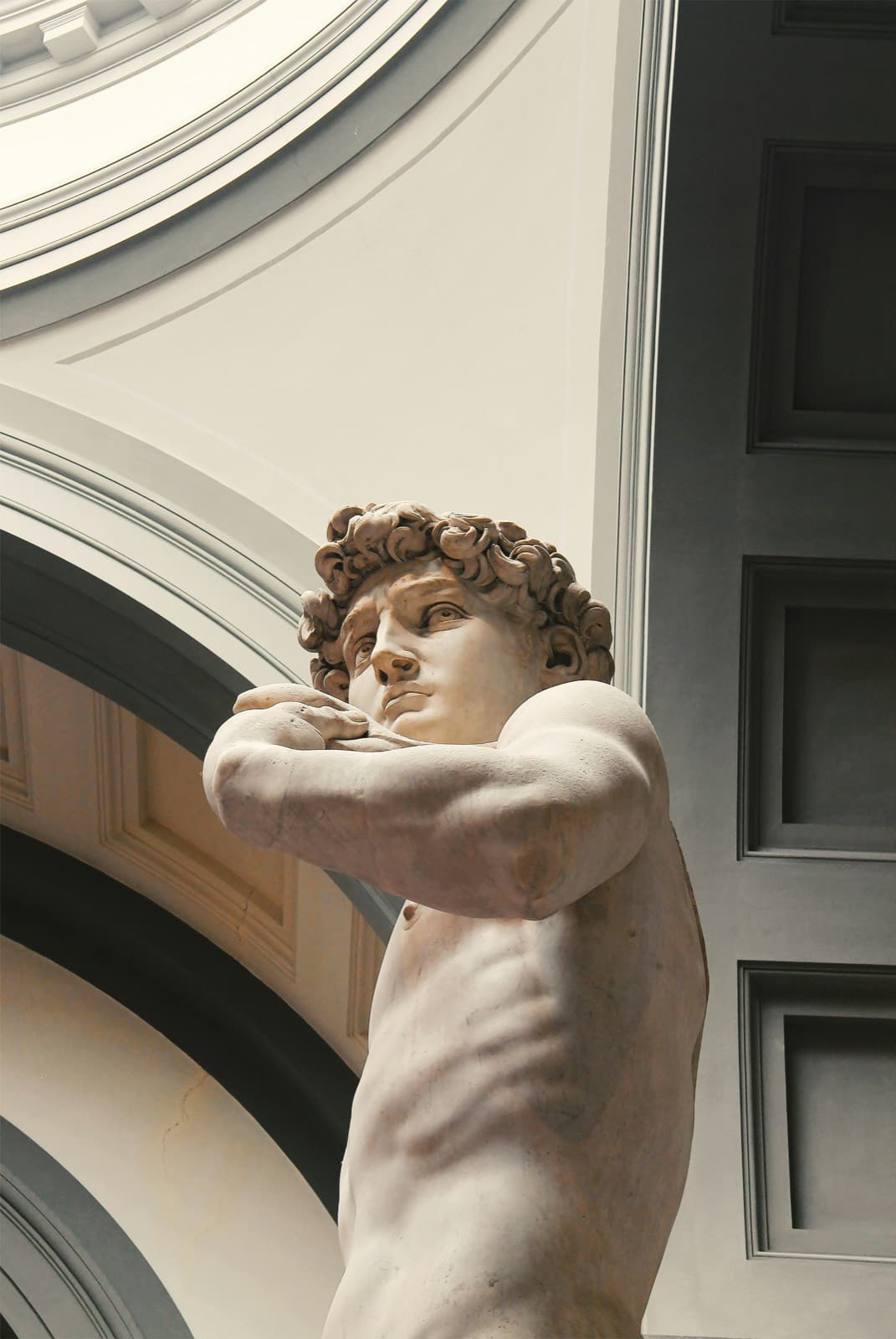
A sculpture standing in a park, a bronze at the bottom of the garden, a monumental work at the entrance to a company headquarters: these pieces live outdoors, exposed to rain, frost, the hands of the public and the night. Where a painting sleeps safely behind a wall and an alarm, outdoor sculpture constantly takes what other works never have to endure. Insuring it is not a matter of ticking the "art object" box in a home policy: it means putting together cover that takes into account the open air, the weight, the anchoring and the gaze of passers-by.
Why outdoor sculpture falls outside standard policies
Most "valuables" cover in a comprehensive home insurance policy is designed for indoors. It covers property located within the walls of the home, caps compensation at a percentage of the contents, and often expressly excludes anything "outside the buildings". A garden sculpture falls precisely into this blind spot: it is neither entirely movable property nor entirely part of the building, it is outside, and its value frequently exceeds the limits provided.
The second gap lies in the nature of the risk. An indoor work mainly fears fire, water damage and theft. An outdoor work adds vandalism, storms, lightning, frost, corrosion, graffiti, and impact from a vehicle or garden machinery. Properly insuring an open-air sculpture therefore requires an all-risks policy on an agreed-value basis designed for the work itself, rather than an endorsement tacked onto a general policy.
The risks specific to the open air
The open air does not merely increase the likelihood of a loss: it changes its nature. Here are the perils that, in practice, weigh most heavily on a sculpture on display.
- Weather and lightning. A storm can topple a poorly anchored piece, hurl a branch, tear off a component. Lightning or flooding often fall under the French natural catastrophe scheme (catastrophes naturelles), but a good policy also covers isolated accidental damage — the thunderstorm that brings the work down one July evening.
- Vandalism and graffiti. A sculpture accessible to the public is a target. Tags, carving, deliberate breakage: cleaning or restoration is costly, and the value may fall even after repair.
- Theft. It is hard to imagine anyone stealing a monumental piece; the facts say otherwise. Medium-sized bronzes, removable components, signed plaques: the theft of sculptures for their artistic value or for the weight of their metal is a constant reality.
- Corrosion and deterioration of the material. Bronze turning green, corten steel oxidising beyond the intended patina, marble becoming grimy, resin yellowing. Here the line is a fine one: normal wear and the material's "inherent vice" are generally excluded, but corrosion accelerated by a sudden event may itself be covered.
- Mechanical impact. A lawnmower, a delivery lorry, construction machinery, a fall during a move: accidental damage is frequent around a work that shares its space with ordinary activities.
What an all-risks policy covers — and excludes
The right answer for the open air is an all-risks policy: all accidental damage and theft are covered, except what is expressly excluded. It is the opposite of a policy that lists only a few named perils and leaves everything else exposed. For an outdoor sculpture, this approach makes a concrete difference, because losses there take forms that no closed list fully anticipates.
That leaves the exclusions, which should be read line by line before signing. Two of them directly concern the open air:
- Inherent vice and wear and tear: deterioration resulting from the very nature of the material or the simple passage of time is not an insured loss. A patina that evolves, slight grime, the expected oxidation of corten steel are matters of maintenance, not insurance.
- Lack of maintenance: an insurer may reduce or refuse compensation if the work has been neglected, with no protective treatment or proper anchoring. Cover assumes reasonable conservation.
Conversely, sudden and accidental damage — the storm that topples it, the vandal who carves into it, the vehicle that hits it — falls within the scope of the cover. The whole subtlety of a fine art policy lies in this dividing line between slow deterioration, which you bear, and the sudden event, which the insurer bears.
Theft and vandalism: the paradox of the work on display
A sculpture only makes sense on display — and that display is precisely what puts it at risk. You do not lock a monumental work in a safe at nightfall. Prevention therefore relies on other levers: heavy, sealed anchoring, a fixed plinth, lighting, cameras, fencing, or simply visibility from the street, which deters intrusion.
These measures are not just common sense: they affect pricing and, above all, what the insurer expects of you. A policy may make theft cover conditional on a specific fixing method. Documenting the anchoring, the surroundings and the security measures when taking out the policy avoids discussions on the day of a claim. It is the same reflex as for an indoor collection, detailed in our article on inventorying and documenting a collection, applied to the constraints of the outdoors.
Liability: when the sculpture becomes a hazard
An outdoor work is not only property to be protected: it is also a mass, sometimes weighing several hundred kilos, installed in a place where people pass by. A plinth that gives way, a component that tips over, a child who climbs on it and gets hurt: the sculpture can cause harm to others. The question of the owner's liability, as the person in charge of the object (gardien de la chose, under French law), then arises far more acutely than for a painting on a wall.
Depending on the context — a private park, a space open to the public, a work installed by a company or an institution — this liability may fall under your home policy, a business policy or dedicated cover. For an artist installing a monumental work on a site, as for a company displaying a piece in its grounds, it is a point to settle in advance. We address it in our support for artists and sculptors as well as for collectors who display works at home.
Setting the value and documenting the work
In the event of a loss, everything rests on one figure: the insured value. For a work of art, the best basis is the agreed value — an amount set by mutual agreement when the policy is taken out, on the strength of an appraisal or a documented estimate, and paid without renegotiation in the event of a total loss. It is the fundamental difference with market value, which we explain in our guide on agreed value or market value.
Documentation matters as much as the amount. Photograph the work from several angles, kept up to date, before any incident; keep the certificate of authenticity, the invoice, your exchanges with the artist or the gallery, and note the condition of the patina. For an outdoor sculpture, this file also helps later to distinguish insured damage from natural deterioration. Finally, bear depreciation in mind: a piece restored after vandalism may be worth less than before, even when perfectly repaired; good cover provides compensation for loss of value on top of the restoration cost.
| Hazard for an outdoor sculpture | Generally covered | Borne by you / excluded | Point to watch |
|---|---|---|---|
| Storm, lightning, accidental fall | Yes, sudden damage | — | Compliant anchoring, possible nat-cat scheme |
| Vandalism, graffiti, deliberate breakage | Yes | — | Report it, have depreciation assessed |
| Theft of the work or a component | Yes | — | Fixing method required by the policy |
| Corrosion, patina, slow build-up of grime | No | Yes (inherent vice, wear) | Regular, documented maintenance |
| Negligence, lack of maintenance | No | Yes (lack of maintenance) | Protective treatment kept up to date |
Installation, moves and maintenance
An outdoor sculpture moves more than one might think: delivery, installation by crane, relocation for garden works, loan to an exhibition, dispatch to a workshop for restoration. Each of these moments concentrates risk, because it is while being handled that a heavy work gets scratched, cracks or falls. The ideal cover follows this cycle without a break — a nail-to-nail approach that covers the work continuously, transit and handling included, and not only when it is in place. The transit side, often underestimated for a monumental piece, is detailed in our article on fine art transit insurance.
Maintenance, finally, is not only a matter of conservation: it is a condition of cover. Anti-corrosion treatment, cleaning suited to the material, checking the anchoring after every winter. A well-tended work is easier to repair, easier to defend with the insurer, and comes through the seasons without the cover losing its substance. Insuring an open-air sculpture is, at heart, accepting that the work lives outside — and building around it the safety net that makes that exposure a calm one.
FAQ
Is a garden sculpture covered by home insurance?
Rarely to a sufficient extent. Many home policies exclude or cap property located outside the buildings, and the value of a work of art often exceeds those limits. A valuable sculpture calls for dedicated cover, on an all-risks and agreed-value basis.
Is vandalism of an outdoor work insured?
Yes, under an all-risks policy: tags, carving or deliberate breakage are sudden and accidental damage, and therefore covered. You need to report the loss, have the restoration costed and, where applicable, the depreciation that remains after repair.
Are corrosion or wear of a sculpture compensated?
No. Slow oxidation, an evolving patina or a build-up of grime fall under inherent vice and wear and tear, which are excluded by nature. However, sudden deterioration caused by a specific event — a storm, an accident — may be covered. Hence the importance of documented maintenance.
How do I set the insured value of a monumental work?
On an agreed-value basis, that is, an amount approved when the policy is taken out on the strength of a recent appraisal or estimate. This amount is paid without renegotiation in the event of a total loss, which avoids any discussion about value at the time of the claim.
Am I liable if my sculpture injures someone?
Potentially, yes: as the owner and the person in charge of the work, you may be held liable if it tips over or injures a third party. Depending on the context, this liability falls under your home policy, a business policy or dedicated cover, to be checked in advance.