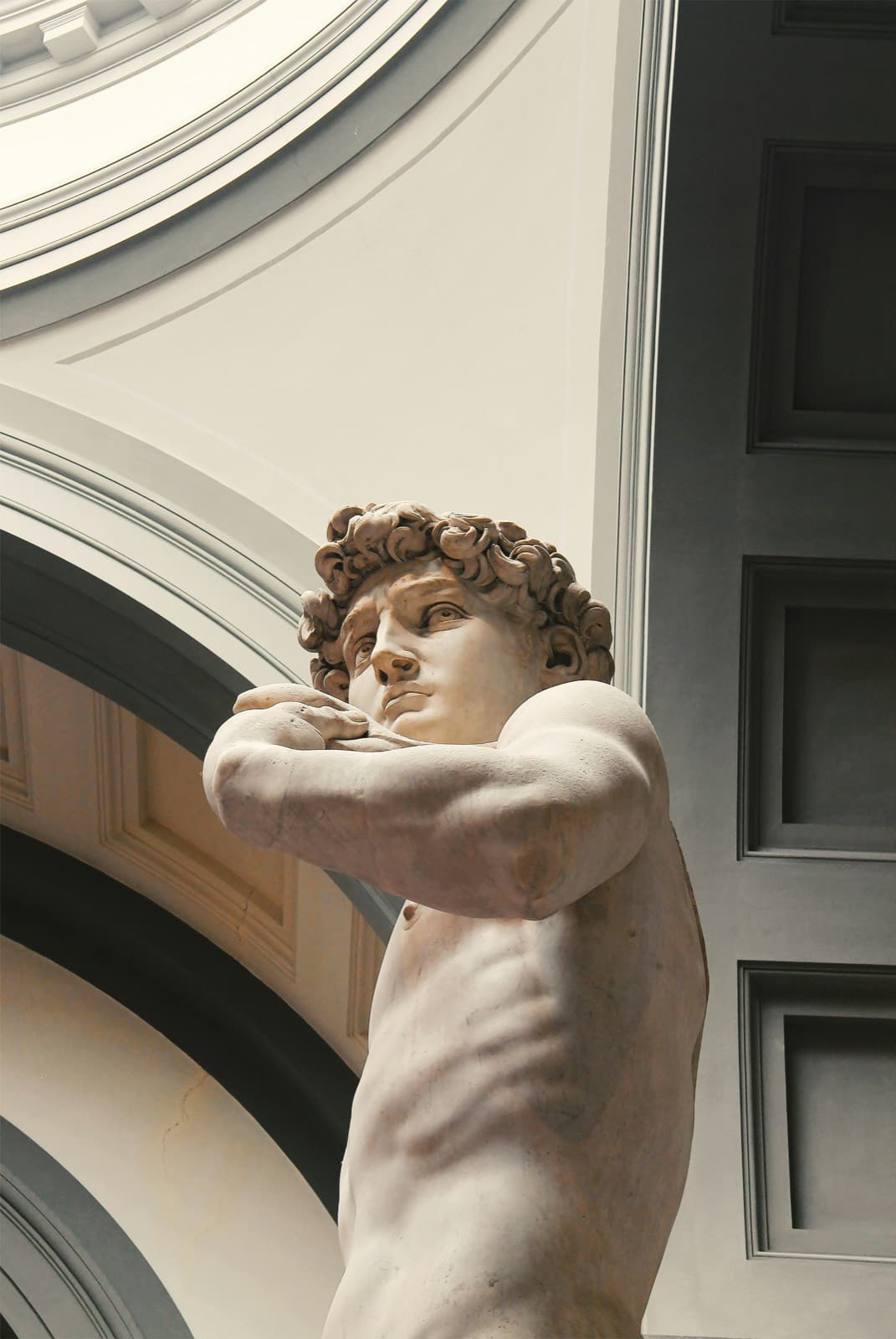
An artist lives surrounded by their own output: canvases drying on the wall, pieces ready to leave, works on consignment with a gallerist, others gone to a fair. This value, often considerable, almost always falls outside the home insurance policy — which sees a studio as nothing more than a poorly covered business space. Insuring your works when you create them yourself follows quite separate rules, which few artists anticipate before their first loss.
Why an artist's studio falls outside standard policies
The studio is a hybrid space. Sometimes you live there, you always work there, and it concentrates a shifting value: materials, works in progress, finished pieces, unsold stock. Yet a standard home insurance policy reasons in terms of domestic "contents" and almost always excludes business activity. A work produced to be sold is not, in the home insurer's eyes, a decorative painting: it is a business asset, outside its scope.
The result: in the event of a fire or water damage in the studio, the artist discovers that most of what burns or is spoiled was not insured. The home policy's "valuables" limit, where there is one, is in any case derisory compared with several months of output. This is the first reflex to correct: a studio is covered by a policy designed for works of art, not by an add-on to home insurance.
There is a further difficulty specific to creators: the value of their work moves fast. A price that rises after an exhibition, a series sold, a commission under way — a studio's inventory is never fixed. Cover must keep pace with this movement, otherwise it protects stock that no longer exists.
What really needs covering, from work in progress to delivered piece
An artist's output passes through several states, each with its own risk. Good cover handles them all, with no gap between stages.
- Works in progress. An unfinished canvas already has value — that of the time and materials invested — even if it has no market price. Covering it requires a valuation basis agreed in advance (reconstitution cost, value of the series).
- Finished works in the studio. This is the core of the stock: pieces ready to be shown or sold. They face the risks of fire, water damage, theft and vandalism.
- Equipment and materials. Presses, kilns, tools, stretchers, pigments, marble or bronze: the tools of the trade, whose loss halts production.
- Works that have left the studio. On consignment in a gallery, lent for an exhibition, sent to a fair or to a client on approval: these are the most exposed, and often the least well insured.
The rule that ties all this together is nail-to-nail cover: the work is covered continuously, from the studio wall to the place where it is shown, and back again. It is the principle behind our all-risks agreed value policy, covered nail to nail, and it saves you having to piece together three policies — yours, the gallery's, the shipper's — hoping they overlap.
Consignment in a gallery: who insures what?
This is the most misunderstood point. When an artist consigns works to a gallerist, they often assume that "the gallery insures them". The reality is more nuanced: it depends entirely on what the consignment agreement does — or does not — provide.
A serious gallery insures the works it exhibits or holds on consignment. But the cover may be capped, include exclusions (transport at the artist's expense, storage in the back room not covered), or rest on a declared value that is too low. And not every gallery has a policy that measures up. The consignment agreement must therefore state in black and white who insures, at what value, and for which causes.
| Situation | Often covered by | To check / secure |
|---|---|---|
| Work on display in the gallery | The gallery (if it has an art policy) | Limit, declared value, exclusions |
| Work in the back room / storage | Variable, sometimes excluded | Is storage included in the policy? |
| Transport studio → gallery | Often at the artist's expense | Transit or nail-to-nail cover |
| Fair, show, off-site exhibition | A frequent grey area | Express extension to the policy |
| Work with a client "on approval" | Almost never covered | The artist's own cover |
The safest reflex is to keep your own cover on the works, in addition to the gallery's. Cover that follows the work wherever it goes fills the grey areas of the consignment agreement and spares you from depending on a policy you have never read. How this works is one of the topics we cover in detail for insurance for artists and their output.
How to value a work that has no price yet
The artist's classic objection is legitimate: "how do I insure a piece whose market value I don't know?". This is exactly where the choice of settlement basis becomes decisive. At market value, the insurer estimates after the event what the work would have been worth — a hazardous exercise for a living artist whose market is still young or uneven.
Agreed value solves this problem: a value is agreed when the policy is taken out, recorded in it, and paid without renegotiation in the event of a total loss. For an artist, this value can be based on recent sale prices, the gallery's price list, or the reconstitution cost for a piece not yet on the market. The mechanism and its advantages are explained in our article on the difference between agreed value and market value.As an illustrative example: a series of ten pieces sold at around €4,000 each provides a clear benchmark for valuing the remaining copies in stock. For a unique monumental work never sold, the cost of materials and production time will be used instead, revisable after the first sale. The key is to document: photos, invoices for materials, sales history, gallery statements. This inventory is the cornerstone of the file — without it, no claim stands up.
Transport to galleries, fairs and exhibitions
An artist moves their works more often than a collector does: delivery to the gallery, hanging an exhibition, transport to a fair, return of unsold works. Yet the journey accounts for the majority of losses — knocks, breakage, theft during loading. Relying on the carrier's liability is a mistake: it is capped according to a scale that bears no relation to the value of the work.
Cover that includes transport, or permanent nail-to-nail cover, avoids having to take out insurance again for each trip. The mechanisms, the exclusions (notably the well-known "inadequate packing") and the right habits are detailed in our guide to fine art transit insurance. For an artist who exhibits regularly, an annual policy covering all movements is almost always more economical than a series of one-off policies.
Building your cover: an artist's reflexes
A few principles are enough to move from illusory protection to solid cover.
- Keep a living inventory. Photograph and catalogue each finished work, with its estimated value and its location (studio, gallery, fair). Update it with every sale and every new piece.
- Choose agreed value for the pieces that warrant it, to avoid any debate about value at the time of a loss.
- Read the consignment agreement before signing: who insures, at what value, whether transport and storage are included.
- Cover movement, not just the wall: transport and off-site exhibitions are where people think they are protected when they are not.
- Have your arrangements reviewed by a specialist broker, who will identify the gaps between your policy, the gallery's and the shipper's.
An artist's output is insured the way it is built: piece by piece, following each work wherever it goes. If you would like to cost cover suited to your studio and your exhibition schedule, you can request a quote to insure your output.
FAQ
Does my home insurance cover the works in my studio?
Very rarely. Home insurance almost always excludes business activity and caps valuables at an amount that bears no relation to an artist's output. A dedicated fine art policy is needed as soon as the studio holds significant value.
Who insures my works on consignment in a gallery?
It depends on the consignment agreement. A serious gallery insures the pieces it exhibits, but the cover may be capped or exclude storage and transport. The safest option is to keep your own cover in addition, to fill these grey areas.
How do you insure a work that has never been sold?
At agreed value, a value is agreed when the policy is taken out: the sale price of comparable pieces, the gallery's price list, or the reconstitution cost for a unique work. This value is recorded in the policy and paid without renegotiation in the event of a total loss.
Can works in progress be covered?
Yes, on a value basis agreed in advance — usually the reconstitution cost (materials and time invested) or the value of the series. An unfinished canvas already has value, and documenting it makes it insurable.
Do fairs and exhibitions need specific insurance?
Often, yes. Many policies do not automatically cover off-site exhibitions. Nail-to-nail cover or an express extension covers the work during transport, hanging and the whole event, until it returns to the studio.
Is the transport of my works to a gallery covered?
Not automatically, and rarely by the carrier beyond a flat-rate scale. Transit cover or permanent nail-to-nail cover protects the work at its real value during every trip, without having to take out cover one trip at a time.